Tarot Cards for Beginners: A Simple Guide to Reading and Meaning
New to tarot? This beginner's guide explains what tarot cards are, how the Major and Minor Arcana work, and gentle ways to start reading with confidence.

Tarot has a way of looking mysterious from the outside, all candles and shuffling and knowing glances. But at its core it is something gentler: a deck of 78 illustrated cards that you can use as a mirror for your own thoughts. You do not need to be psychic, and you do not need years of study to begin. You just need curiosity.
This guide walks through the basics so you can pick up a deck and start.
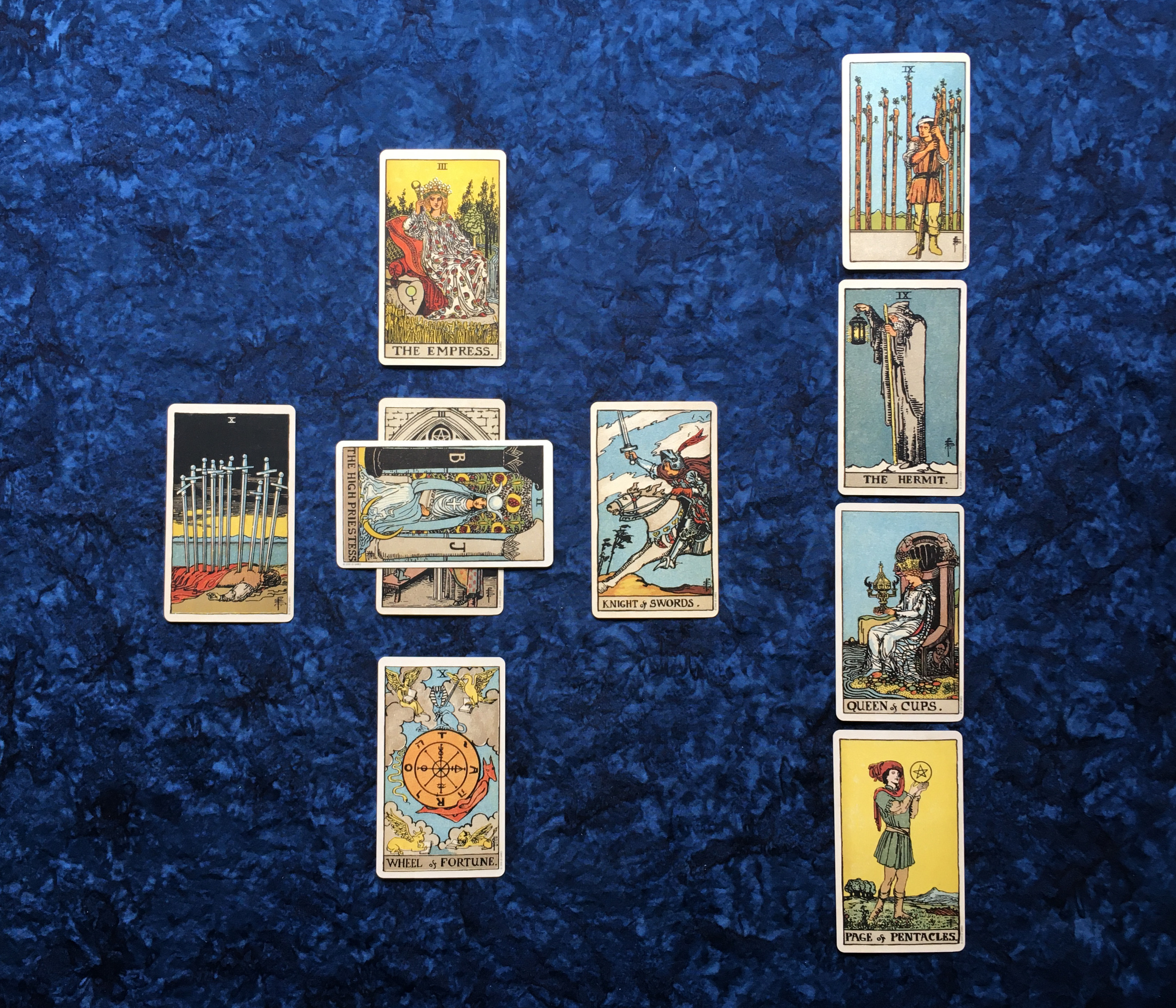
Image: Photo by Nosferattus (CC0) via Wikimedia Commons
What is in a tarot deck
A full tarot deck has two parts.
The Major Arcana is the famous one: 22 cards that carry the big themes of a human life, from The Fool’s first step to The World’s completion. When one of these turns up in a reading, it tends to point to something significant.
The Minor Arcana has 56 cards across four suits, much like ordinary playing cards. Each suit speaks to a different area of life:
- Cups for emotions and relationships
- Pentacles for money, work, and the material world
- Swords for thoughts, conflict, and communication
- Wands for energy, passion, and creativity
Together they form a picture language for almost any situation you might bring to the cards.
The five cards worth knowing first
If the 78-card deck feels like a lot, start with a handful of the most important Major Arcana. Each of these has its own full guide:
- The Fool, new beginnings and a leap of faith
- The Magician, focus, skill, and turning ideas into reality
- The High Priestess, intuition and inner knowing
- The Lovers, relationships, choices, and alignment
- The Wheel of Fortune, change, cycles, and turning points
Learn these five and you already hold the spine of the tarot story.
How to do your first reading
Keep it simple. Shuffle the deck while thinking of an open question, something like “What do I need to see right now?” rather than a strict yes-or-no. Then draw three cards and lay them left to right.
A common reading is past, present, future, but you can assign any meaning you like to the three spots. Look at each image. Notice your first reaction before you reach for a meaning. The guidebook helps, but your own response to the picture is part of the reading too.
A grounded way to think about tarot
Tarot is best understood as a tool for reflection, not a crystal ball. The cards do not decide your future; they give you language and perspective to think more clearly about your present. Used this way, even a quick three-card pull can surface something you already knew but had not put into words.
Tarot in art and culture
Tarot has long fascinated artists and creators, which is part of why its imagery feels so rich. The deck most beginners learn on was illustrated by Pamela Colman Smith, an artist whose 1909 designs for the Rider-Waite-Smith deck still shape how tarot looks today. Decades later the surrealist painter Salvador Dalà created his own ornate deck, the Dalà Universal Tarot, and the filmmaker and writer Alejandro Jodorowsky spent years studying and restoring the historic Tarot de Marseille, even writing a book about it.
The fascination continues in music. Singers including Lana Del Rey, Florence Welch of Florence and the Machine, and Dua Lipa have spoken in interviews about pulling tarot cards, and the deck’s symbolism turns up again and again in album art and lyrics. You are in creative company when you sit down with the cards.
A closing thought
There is no test to pass and no single right reading. Start with a deck you like, learn a few cards at a time, and let the images do their quiet work. If you would like to keep symbolic, soulful art close in daily life, explore our collection of meaningful designs.
Frequently asked questions
How many cards are in a tarot deck?
A standard tarot deck has 78 cards: 22 Major Arcana that mark big life themes, and 56 Minor Arcana split into four suits that cover everyday matters.
Do I need a special deck to start?
No. The most common beginner deck is the Rider-Waite-Smith, loved for its clear, symbolic images. The best deck is simply one whose artwork speaks to you.
Can tarot predict the future?
Most modern readers treat tarot as a tool for reflection rather than fortune-telling. The cards offer prompts and perspectives that help you think through a situation, not fixed predictions.
What is the easiest tarot spread for beginners?
The three-card spread is a friendly start: one card for past, one for present, one for future, or any three positions you choose. It gives enough depth without feeling overwhelming.